Removal Van Kensington

Removal Van Kensington provides a practical removals service for household and business moves that need careful loading, secure transport and straightforward coordination. The work can suit a single bulky item, a full flat move, or a planned transfer of furniture and boxes, with the emphasis on keeping the process organised and the vehicle space used well. If you need a removal van in Kensington, the service is built around moving items safely and sensibly rather than adding unnecessary complexity.
Our approach centres on the details that matter on moving day: access, item size, handling, and the route from collection to delivery. We can support man and van style moves where a lighter touch is appropriate, and we also handle more involved jobs that benefit from a fuller removals setup. The aim is to give customers a clear option for moving possessions from one property to another with the right balance of capacity and care.
For a straightforward start, tell us what needs moving, where it is going and whether any awkward or fragile pieces are involved. A short description is often enough to begin planning, while photos and a simple inventory can help when items are mixed, heavy or unusually shaped. Useful detail at the enquiry stage makes it easier to match the van, the team and the timing to the job.
House, flat and furniture moves
House moves and flat moves each bring their own practical issues, from stair access to the amount of packing that needs protecting during transit. We cover house removals for larger domestic moves and flat removals where access may be tighter or the load is more compact. Furniture can be taken as part of a full move or on its own, and items such as wardrobes, sofas, tables and beds need to be handled with care so they arrive ready for use.
When the job is centred on larger pieces rather than a whole property, furniture removals can be a sensible option. This is useful where customers are moving new purchases, replacing a room, or shifting selected items between addresses. We also support furniture pick-up where individual pieces need collecting from one location and delivered to another, with loading arranged to suit the item shape and any access limits.
Typical domestic move planning benefits from a clear sequence. Start by identifying the items that must travel together, then note anything that needs dismantling, protection or extra lifting. If a move includes a mixture of boxes and furniture, it is usually better to group them by room or priority rather than leave them as a loose list. This helps the vehicle space, loading order and drop-off sequence all work more smoothly.
Office and commercial removals

Business moves need a tidy handover and a layout that keeps disruption under control. We offer office removals and office relocation services for equipment, desks, chairs, filing, boxes and other contents that need careful movement between premises. The objective is to shift items in an orderly way, with sensible attention to access, lifting and placement at the destination so the next stage of work can begin.
Commercial jobs often involve a combination of furniture, archive material and fragile technology, which is why the way items are packed and labelled can matter as much as the transport itself. Our commercial moves service can support businesses that need coordinated relocation rather than a simple point-to-point haul. Where planning is important, the route, loading order and any building restrictions should be considered before moving day.
For business customers, it helps to think in terms of workstations, departments and priority items rather than just volume. A sensible plan might include which desks are coming first, what must remain accessible until the final hour, and whether there are items that should travel separately. That way the move is not only physically manageable but also easier to settle once goods have been delivered.
Packing, handling and move preparation

Good preparation can make a removal van service more efficient without turning the process into extra work for the customer. We can assist with packing and boxes when materials are needed, and packing and unpacking services where a more complete handover is helpful. Packing matters because boxed items are easier to stack, better protected in transit and simpler to place in the right order at delivery.
Some items need more than standard boxing. Lamps, mirrors, artwork, kitchenware and assorted small valuables benefit from separation and padding so they are not pressed against heavier loads. A move also becomes easier when the customer has chosen what will travel, what will stay behind and what needs to be kept accessible on arrival. Good labelling is not essential for every move, but it can save time when several rooms or multiple stops are involved.
- Separate fragile items from heavier boxes where possible.
- Keep tools or fixings together with any dismantled furniture.
- Identify items that must be unloaded first at the destination.
- Allow space for the van to be loaded in a practical order.
About Kensington
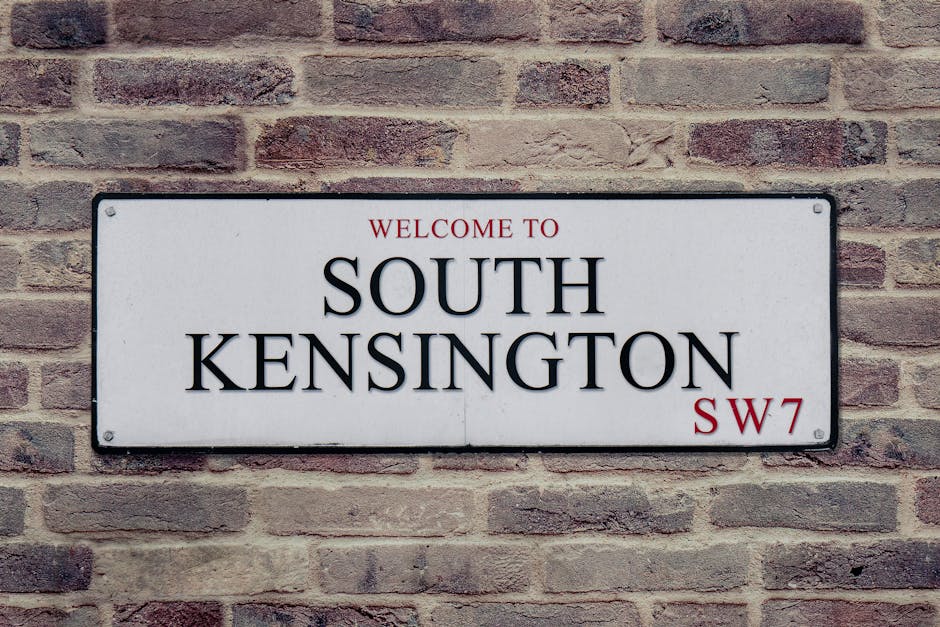
Kensington is a district in west London known for a dense mix of historic streets, cultural institutions and high-value residential architecture. It sits within the Royal Borough of Kensington and Chelsea and is closely associated with elegant terraces, garden squares and institutions that have helped shape London’s public life. Kensington High Street forms one of its best-known commercial spines, while South Kensington extends the area’s identity towards exhibition and museum culture. The neighbourhood’s built environment reflects many periods, from Georgian and Victorian development to later commercial and residential infill, creating a streetscape that is varied rather than uniform. Several parts of Kensington are notable for their access to open space, particularly the proximity of Kensington Gardens and Hyde Park, both of which contribute to the district’s character and long-standing appeal.
Domestic moves with different access needs
Not every home move is the same, even when the amount of furniture looks similar on paper. A top-floor flat, a basement property and a house with front drive access each call for a different loading approach, especially when stairwells, narrow hallways or parking arrangements affect the handling of larger items. Our home moves service is aimed at those practical differences, giving space for a move to be planned around the property rather than forced into a one-size-fits-all method.
It can also be useful to think about how the van will be loaded, not just what needs to travel. Heavier items are generally easiest when placed first, with lighter and more delicate items kept secure above or around them as appropriate. Where customers are moving from a compact property, the job may still involve careful sequencing because one awkward piece can affect how the rest of the load fits. The right arrangement reduces shifting during transit and makes unloading more controlled.
For many domestic moves, the best next step is simply to set out the essentials clearly. If you know which rooms are moving, whether the items are boxed or loose, and if any furniture needs dismantling, the quote can be shaped around those facts. A little clarity here can make the whole process easier to coordinate, especially where access or parking may affect timing.
Man and van flexibility for smaller jobs

Where a full removal vehicle is more than is needed, a lighter service can still provide the same careful handling. Our man with van and man with a van options are suitable for smaller loads, selected items or local moves that benefit from direct transport without excess capacity. This can be a practical choice when a customer has only a few boxes, a single room’s contents or one or two awkward pieces to move.
Smaller jobs are often decided by convenience and access rather than volume alone. A compact move may still involve stairwork, limited loading space or a need to keep items separate during transit. In those situations, the usefulness of a van lies in matching the task to the space available, while keeping the handling straightforward. If a job grows beyond a simple load, the service can be scaled to suit the move instead of making the customer adapt to an unsuitable vehicle size.
There are also times when a customer wants to move just one part of a household or business without organising a broader relocation. That might include a few chairs, storage boxes, surplus office equipment or recently purchased furniture. In each case, a direct transport plan keeps the job focused and avoids overcomplicating the arrangement. Smaller does not mean less careful; it simply means the service is matched to the scope of the load.
Storage, interim moves and held items

Some moves do not end at the first delivery point. Items may need to be stored for a period during a home change, refurbishment or business reorganisation, and that is where storage can become part of the plan. Combining removal transport with storage reduces the number of times items have to be handled, which can be helpful for furniture, boxes or mixed contents that are not all required immediately. The key is to know which items are going into storage and which should be delivered directly.
Interim arrangements are often about sequencing rather than urgency. A customer may need selected furniture taken out first, then the remaining items moved later once access is ready at the new address. In other cases, a property handover means some contents must be cleared while others stay protected elsewhere. By defining the route for each group of items in advance, the overall move remains orderly and easier to manage.
If your move includes storage or a staged delivery, use the enquiry to separate the load into clear groups. That can be as simple as listing what is going to the new property, what is being held back and what is going into storage. A precise plan helps us align the vehicle space, the lifting order and the final drop-off sequence. Request a quotation when you are ready to set out the details.
Special items, heavier pieces and careful transport
Some belongings need a more considered approach because of weight, shape or fragility. Piano removals are a good example, as the item must be moved with attention to floor surfaces, access points and safe handling. Not every move includes specialist objects, but when it does, the question is less about speed and more about control. The right method protects the item and reduces unnecessary strain during loading and unloading.
Other awkward pieces may include large wardrobes, glass tables, exercise equipment or items with removable parts. These often benefit from dismantling where appropriate, padding around vulnerable surfaces and a loading order that leaves enough room for the item to sit securely. If a piece is particularly heavy or irregular, it may need extra planning before anyone starts lifting. That planning can prevent avoidable delays and help the delivery proceed in a steadier rhythm.
When special items are involved, the most useful information is usually practical rather than lengthy. Dimensions, floor level, access width and whether the item can be separated into parts are often enough to begin. If you are unsure how to describe something, a short note and a clear photo can help the planning stage without making the enquiry complicated. The goal is simple: move the item in a way that suits the object itself.
Quotes, pricing factors and what to include
Moving costs are usually shaped by the size of the load, the distance involved, the handling required and any special access issues at collection or delivery. We provide pricing and quotes information for customers who want to understand the main factors before booking. A move with several large items, limited parking or awkward stair access will naturally be different from one involving a few boxed belongings and a clear loading point.
The best quotation requests focus on facts that affect the work. These can include the type of property, the number of items, whether furniture needs dismantling, and whether the move includes one address or more than one stop. If the job is commercial, it helps to note the number of desks, files or pieces of equipment involved. That way the quote can reflect the work realistically rather than relying on guesswork.
We keep the process practical: explain the move, identify any limitations, and let the transport be arranged around the actual task. If the load is flexible, say so. If certain pieces are fixed, fragile or need special handling, make that clear from the start. Clarity at this stage supports a better estimate and a smoother moving day.
Removal services, insurance and responsible handling
Our wider removal services framework covers the different kinds of moving work that customers commonly need, from domestic loads to business transport and more specialised item handling. It is useful when a move does not fit neatly into one narrow label. For some customers, the job is a full clear-out and relocation; for others, it is a one-off transport solution for furniture, office equipment or mixed boxes.
Responsible moving also depends on how items are treated while they are being lifted and carried. Careful handling, sensible loading and attention to protective packing all play a part in reducing the risk of damage. Where customers want to read more about the practical side of protection and transport standards, our insurance and safety information is available alongside the service pages. The point is to keep the move orderly from the first lift to the final placement.
If you are comparing options, think about what matters most for your particular move: capacity, access, item type and the level of support you want on the day. A short conversation about those points is usually enough to steer the job in the right direction. When you are ready, ask for a quote and we can take the next step with the details you already have.